Home
» Horoscope
»
Chinese Goat Zodiac: Birth Years, Five Elements, Traits, Compatibility, and Luck
Chinese Goat Zodiac: Birth Years, Five Elements, Traits, Compatibility, and Luck
What Years Are the Chinese Goat Zodiac?
The Goat is the eighth animal in the 12-sign Chinese zodiac. Its recent birth years include 1955, 1967, 1979, 1991, 2003, 2015, and 2027—but only for people born on or after Lunar New Year in the relevant year. Anyone born in January or early February must check their exact birthday before claiming the Goat sign. In English, the animal is also called the Sheep or Ram, translations of the Chinese character 羊 (yáng).
Traditional descriptions associate the Goat with sensitivity, creativity, cooperation, and an appreciation of beauty. The five-element cycle adds Wood, Fire, Earth, Metal, or Water to the animal. These are cultural interpretations rather than scientific measures of personality, relationship success, or future luck.
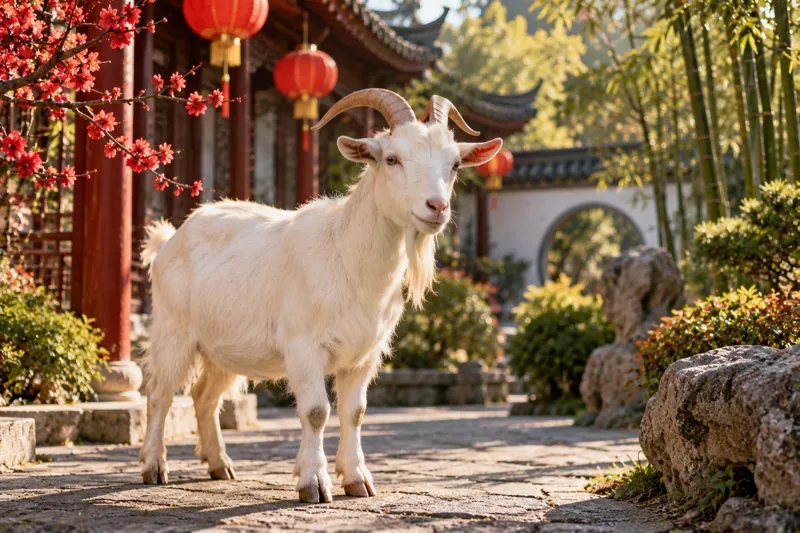
A white goat stands beneath red lanterns in a garden courtyard, reflecting the animal at the center of the Chinese Goat zodiac.
Goat Birth Years and Five Elements
Every 12 years the Goat animal returns; the same animal-and-element combination repeats every 60 years. For someone born near Lunar New Year, the exact day takes priority over the Gregorian year printed on a birth certificate. The Hong Kong Observatory Gregorian–Lunar conversion tables provides year-by-year date checks.
Gregorian year commonly associated with Goat
Element
Traditional emphasis
1955
Wood Goat
Growth, generosity, cooperation
1967
Fire Goat
Enthusiasm, expression, conviction
1979
Earth Goat
Practical care, steadiness, patience
1991
Metal Goat
Principles, persistence, precision
2003
Water Goat
Adaptability, reflection, sensitivity
2015
Wood Goat
Growth, generosity, cooperation
2027
Fire Goat
Enthusiasm, expression, conviction
For two verified examples, 2015 Wood Goat began February 19, 2015, and 2027 Fire Goat begins February 6, 2027. Someone born February 18, 2015 is not a Wood Goat under the Lunar New Year convention; someone born February 19 is. Similarly, a February 5, 2027 birthday is still in the preceding Horse year, while February 6 begins the Goat year. See the Hong Kong Observatory 2015 calendar and Hong Kong Observatory 2027 calendar. Some Four Pillars (BaZi) schools use the solar term Li Chun for the year pillar rather than Lunar New Year. That is a different convention; this birth-year guide uses Lunar New Year consistently.
What Is the Goat Personality in Chinese Astrology?
The traditional Goat is considerate, imaginative, observant, and more inclined to seek harmony than confrontation. This portrayal may resonate with people who enjoy design, mentoring, hospitality, or patient teamwork. It should not be used to diagnose someone’s character or predict how they will behave.
Strengths Worth Developing
Empathy: noticing how decisions affect other people can strengthen teamwork and trust.
Creativity: seeing multiple possibilities can help with writing, visual design, and problem solving.
Patience: steady follow-through is valuable in research, caregiving, and long projects.
Diplomacy: asking good questions before acting can reduce unnecessary conflict.
Common Weaknesses in Traditional Descriptions
Goats are sometimes portrayed as indecisive, overly sensitive to criticism, or reluctant to take risks. These are narrative themes, not fixed weaknesses. If a person tends to delay decisions, a useful response is to set a deadline and compare two or three options against written criteria. If conflict feels uncomfortable, practice stating one clear boundary rather than assuming silence will solve the issue.
How Do the Five Elements Change the Goat?
The animal describes the broad archetype; the element introduces another symbolic emphasis. A Wood Goat is commonly read as nurturing and growth-oriented; a Fire Goat as more animated and expressive; an Earth Goat as dependable and grounded; a Metal Goat as firm in standards; and a Water Goat as flexible and perceptive. These variations come from traditional symbolic systems and are not independently verified personality types.
Consider two coworkers who both identify with the Goat: a 1991 Metal Goat may enjoy the imagery of careful standards, while a 2003 Water Goat may prefer the image of flexibility. Neither should choose a career based on that label alone. Their demonstrated skills, working conditions, interests, and responsibilities are better evidence for a real decision.
Which Zodiac Animals Are Compatible With the Goat?
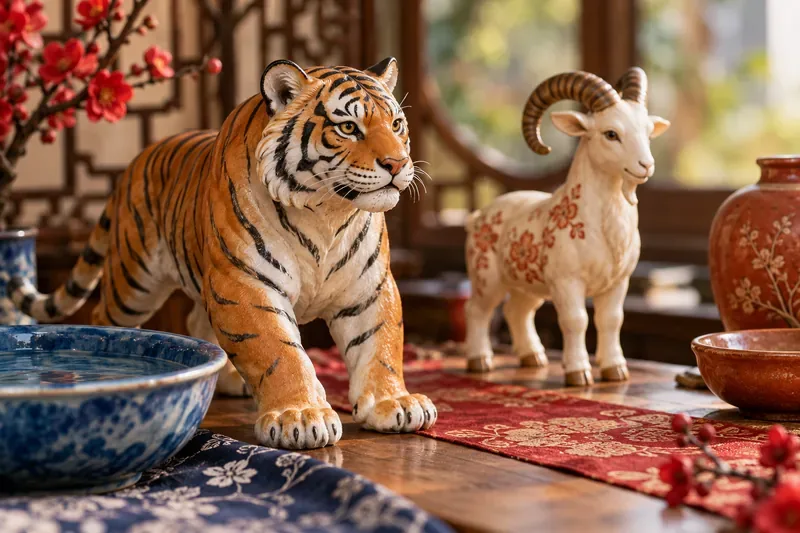
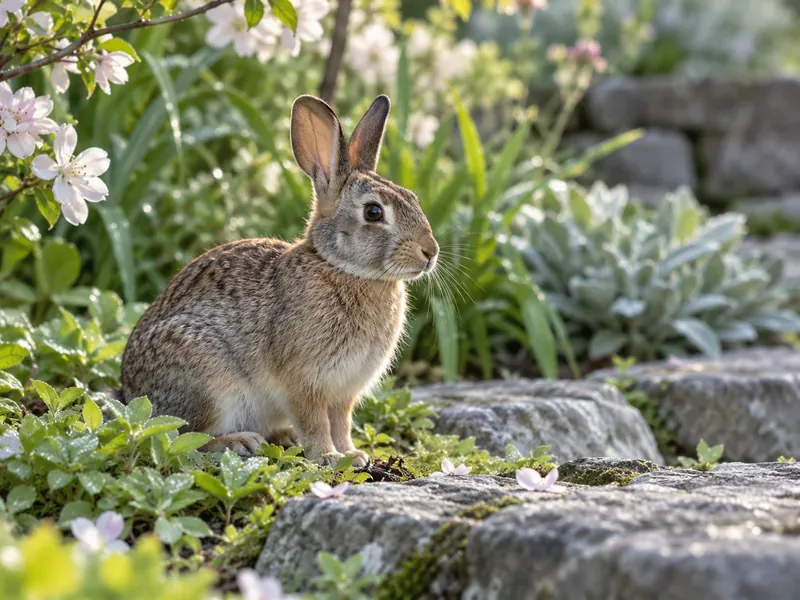
In popular Chinese zodiac compatibility traditions, Rabbit, Horse, and Pig are frequently described as supportive matches for the Goat. The Rabbit and Pig are part of the Goat’s traditional three-harmony grouping; Horse is described as a complementary six-harmony pairing. Ox is often considered a challenging opposition or clash. These classifications describe traditional relationships among zodiac signs, not proven predictions about couples or colleagues.
Pairing
Traditional reading
What matters in real life
Goat + Rabbit
Gentle, cooperative
Ability to discuss difficult issues directly
Goat + Pig
Warm, mutually supportive
Balanced expectations and shared effort
Goat + Horse
Complementary energy
Agreement on independence and routines
Goat + Ox
Traditionally tense
Respect for different decision-making styles
If you are evaluating a relationship, ask whether both people communicate respectfully, keep commitments, and want compatible futures. Those observable factors are more useful than a zodiac pairing. A so-called favorable match still requires work, and a supposed clash does not rule out a healthy relationship.
Love and Relationships: What Does a Goat Need?
Goat symbolism often emphasizes affection, emotional safety, and thoughtful gestures. A person who relates to that style may value consistent attention more than grand declarations. The practical trade-off is that preserving harmony can turn into avoiding necessary conversations.
For a new relationship, favor someone who respects boundaries and can discuss money, family, or time commitments without hostility. For an established partnership, try a short weekly check-in: share one appreciation, one unresolved concern, and one concrete plan. These habits apply regardless of birth sign or partner’s zodiac animal.
Career and Money: Where Can Goat Traits Be Useful?
Traditional Goat descriptions point toward creative and people-centered work—design, education, healthcare support, counseling-related fields, communication, and community roles. That does not mean every Goat should enter those industries, or that analytical and technical work is unsuitable. A careful engineer, product manager, or financial analyst may also relate strongly to the Goat’s patient and detail-conscious side.
Choose a Working Environment, Not a Zodiac-Assigned Job
If you like collaborative work: compare roles by team culture, feedback practices, and decision-making autonomy.
If you enjoy creating things: test a portfolio project before committing to an expensive degree or career change.
If you prefer predictability: examine income stability, workload, and training requirements, not symbolic “career luck.”
If you need faster advancement: practice visible ownership and direct negotiation; quiet competence alone may not be noticed.
Financially, Goat lore often favors security and comfort. A sensible approach is to build a budget, maintain an emergency buffer appropriate to individual circumstances, and evaluate major purchases by affordability and long-term value. No zodiac sign can tell you whether an investment will rise or whether a particular month will bring wealth.
Lucky Colors, Numbers, and Symbols
Lucky associations differ between traditions and modern reference lists; there is no single authoritative set for every Goat or every element. Some popular customs connect Goat imagery with green, red, or purple, and numbers such as 2 and 7. These examples should be treated as optional folklore, not universal rules or proven advantages. Avoid spending money, making medical decisions, or choosing a partner because a color or number is labeled lucky.
If symbolic choices are meaningful to you, use them in low-stakes ways: a favorite color for a notebook, a goat motif for a Lunar New Year card, or a personal reminder to practice kindness. The cultural value lies in the story and occasion, not a guarantee of results.
2027 Fire Goat Year: What Changes?
The next Goat year begins on February 6, 2027, according to the Hong Kong Observatory 2027 calendar. Its traditional sexagenary designation is Ding-wei, commonly called the Fire Goat year. It is not accurate to describe January 2027 as the Fire Goat year under the Lunar New Year approach. Nor does the return of a person’s birth animal automatically make the year fortunate or unfortunate.
2027 outlook (traditional interpretation, not a prediction): Fire adds an image of initiative and visibility to the Goat’s gentler symbolism. Readers may use that combination as a prompt to balance self-expression with thoughtful planning.
Love and Social Life
The Fire Goat theme can be read as encouragement to express feelings more clearly while listening just as carefully. Rather than waiting for an auspicious date, look for mutual interest, safety, and consistent behavior. If conversations keep circling without progress, make a specific request and agree on when to revisit it.
Career and Learning
For students and early-career workers, 2027 can be a convenient milestone for choosing a skill to demonstrate publicly. Complete one portfolio piece, request feedback, or apply for a role after checking its qualifications. Avoid interpreting the Fire element as proof that promotions or career changes are guaranteed.
Money
Balance enthusiasm with a decision checklist: total cost, worst-case loss, flexibility, and whether the purchase or investment meets an actual need. A symbolic “lucky period” cannot substitute for a savings plan or regulated financial guidance.
Health and Well-Being
Goat-year symbolism may inspire attention to rest and emotional balance, but it gives no medically reliable forecast. Follow evidence-based routines such as appropriate physical activity, sufficient sleep, and professional care for persistent symptoms. Do not postpone treatment because a horoscope suggests a better month.
Favorable Periods and Cautions
For readers who enjoy seasonal symbolism, the opening weeks after Lunar New Year may feel like a natural moment to set intentions, while midyear and year-end can serve as progress reviews. These are planning suggestions, not independently verified auspicious periods. Commit to deadlines based on school terms, work cycles, finances, and personal availability. Watch for overcommitting, avoiding difficult conversations, or treating reassuring zodiac language as evidence.
How to Check Your Chinese Goat Sign Accurately
Start with your full date of birth, then use the official lunar calendar to see whether it falls before or after that year’s Lunar New Year. Determine the animal and the year’s heavenly-stem element from the resulting lunar year. For instance, February 19, 2015 is Wood Goat, but February 18 is in the prior lunar year. If a personal reading uses BaZi or the spring solar term, confirm its boundary convention before comparing answers.
For deeper reading, look for related guides to the 2015 Wood Goat, 2027 Fire Goat, each Goat element, Chinese zodiac compatibility, and the 2027 Chinese horoscope. Those are useful internal-link topics; a birth-date check is still the first step.
Where Do These Traditions Come From?
The Chinese zodiac is a longstanding cultural calendar system, not merely a modern personality quiz. The Metropolitan Museum of Art’s collection of twelve zodiac animals explains the twelve-animal order and its historical combination with the ten heavenly stems into a 60-year sequence. Calendar dates in this guide follow the Hong Kong Observatory Gregorian–Lunar conversion tables; descriptions of character, matches, and luck are explicitly traditional interpretations rather than established causal findings.
Bottom line: If your birth date falls within a Goat lunar year, you may identify with its imaginative and compassionate symbolism. Use the zodiac as a cultural lens or a starting point for reflection; use evidence, communication, and your actual circumstances for major decisions.