Home
» News
»
Israel–Iran War: What the Latest Escalation Means for the Region, Energy, and Travel
Israel–Iran War: What the Latest Escalation Means for the Region, Energy, and Travel
Updated September 20, 2026. The most important point is that the latest escalation should not be read as a single new Israel–Iran exchange. The conflict has become a prolonged regional confrontation in which Israeli and U.S. military action against Iran, Iranian retaliation, pressure on Gulf shipping, and the activity of Iran-aligned armed groups can reinforce one another. That makes the next phase less predictable than a simple cycle of strike and counterstrike.
For readers trying to understand what this means in practical terms, the biggest near-term risks are wider military spillover, further disruption in the Strait of Hormuz, renewed pressure on oil and fuel prices, and additional travel and aviation disruptions. At the same time, escalation is not inevitable: the conflict has already produced periods of reduced fighting and attempted diplomacy, so the direction of travel depends heavily on whether military exchanges broaden or negotiations regain traction.
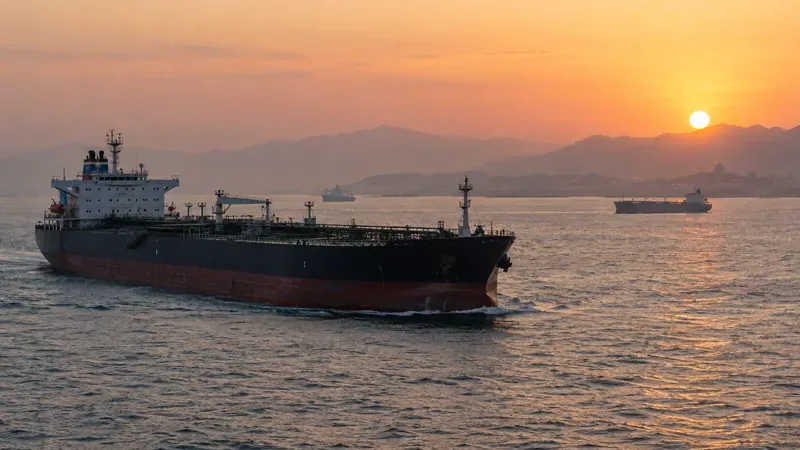
A commercial tanker moves through open water at sunset. Shipping through and around the Strait of Hormuz is one of the clearest ways the conflict can affect people far beyond the immediate war zone.
What has changed in the latest escalation?
The conflict that began with major U.S. and Israeli attacks on Iran earlier in 2026 has not settled into a durable ceasefire. Israel's military says the joint U.S.–Israeli campaign began on February 28 under what it calls Operation Roaring Lion; that page is an Israeli official account and should be read as one party's description of the campaign rather than as an independent assessment. See the Israel Defense Forces overview of the 2026 Iran campaign.
More recently, the United Nations said on September 2 that the Secretary-General was "gravely concerned" by a renewed exchange of fire between the United States and Iran, reports of civilian casualties, and the effect on airspace and critical shipping routes. The UN again called for an immediate halt to military action and a return to diplomacy. That official statement is available in the UN daily press briefing for September 2, 2026.
That distinction matters. A headline focused on an “Israel–Iran war” can make it sound as if every new development is a direct exchange between Israel and Iran. In practice, the current conflict includes several overlapping tracks: direct Israel–Iran hostilities, U.S.–Iran combat, attacks on or near commercial shipping, and violence involving armed groups elsewhere in the region. A new incident in one track can raise the risk of escalation in the others even when Israel itself is not the immediate actor.
Why the Strait of Hormuz matters so much
The Strait of Hormuz is now one of the most consequential pressure points. The International Maritime Organization says the situation remains unresolved and that thousands of seafarers have faced heightened risk and uncertainty. On August 28, the IMO said it had verified at least 70 attacks on international shipping since the current Middle East conflict began on February 28 and reported 19 seafarer deaths. The IMO's current information hub also tracks transit conditions and safety guidance. See the IMO Middle East and Strait of Hormuz hub and its August 28 statement on six months of uncertainty for seafarers.
For consumers, this is not an abstract maritime issue. The U.S. Energy Information Administration reported that disruptions to crude oil and petroleum-product flows through the strait contributed to higher and more volatile oil prices during the second quarter of 2026. Brent crude futures moved across a very wide range during that period, and buyers sought alternative supplies when Gulf exports were disrupted. See the EIA analysis of second-quarter 2026 petroleum-market disruptions.
If shipping risks rise again, the effect can appear through higher freight costs, insurance costs, delayed cargoes, and renewed energy-price volatility. That does not mean every military incident will immediately cause a lasting jump in gasoline prices. The impact depends on whether actual oil flows are interrupted, how long the disruption lasts, whether producers can reroute exports, and how much spare supply is available elsewhere.
What the escalation means for nuclear risk
The nuclear dimension remains important even when the latest fighting is centered on missiles, ships, or conventional military targets. The central issue is not only physical damage to nuclear sites but also whether international inspectors can verify what is happening inside Iran's nuclear program.
On August 6, a UN spokesperson said the IAEA still lacked access to Iranian nuclear sites after U.S.–Israeli strikes and repeated the UN's call for Iran to provide the access the agency needs. The same briefing emphasized that verification is important to establishing that Iran's nuclear program is used only for peaceful purposes. See the UN briefing on IAEA access in Iran.
The UN Security Council also held a non-proliferation briefing on September 10 under the committee established by Resolution 1737, underscoring that the nuclear file remains active alongside the military conflict. See the Security Council meeting record for September 10, 2026.
For readers, the practical takeaway is that a military lull would not automatically resolve the nuclear dispute. A durable reduction in risk would likely require both fewer military exchanges and a workable inspection and diplomatic framework.
What this means for travel and personal safety
For U.S. travelers, official advice remains restrictive. The State Department continues to list Iran at Level 4, "Do Not Travel," and says U.S. citizens in Iran should leave immediately. Its advisory cites risks including terrorism, unrest, kidnapping, arbitrary arrest, and wrongful detention. See the current U.S. travel advisory for Iran.
Israel is listed at Level 3, "Reconsider Travel," with some areas carrying stronger warnings because of armed conflict. The August 26 advisory says travelers should reconsider travel to Israel because of terrorism and unrest and identifies specific no-travel zones near active conflict areas. See the current U.S. travel information for Israel, the West Bank, and Gaza.
If you already have travel booked, the useful question is not simply whether a country is “open.” Check the current government advisory, the airline's operating status, airport notices, and whether your insurance excludes war-related disruption. Conditions can change faster than a standard tourism page is updated, especially when airspace restrictions are imposed with little notice.
How to interpret the next headline
Development
Why it matters
What would make it more serious
New Israeli or U.S. strikes in Iran
Could trigger Iranian retaliation and expand the geographic scope of fighting.
Repeated large-scale strikes, attacks on strategic infrastructure, or retaliation against multiple countries.
Incident involving a tanker or commercial vessel
Can raise shipping risk, insurance costs, and concern about oil flows.
Multiple confirmed attacks, sustained closure or severe restriction of transit, or damage to major export infrastructure.
New diplomacy or ceasefire talks
Can reduce immediate military risk even before a broader settlement exists.
Verified agreements on military restraint, shipping access, or nuclear inspections.
Changes in IAEA access
Affects confidence about the status of Iran's nuclear activities.
Longer loss of verification, new undeclared movements, or attacks on safeguarded facilities.
New regional proxy attacks
May widen the conflict without a direct Israel–Iran strike.
Attacks that draw Gulf states, the United States, or Israel into sustained retaliation.
What does the latest escalation mean for Americans?
For most Americans, the effects are more likely to be indirect than physical: fuel-price volatility, financial-market swings, travel disruption, and changes in U.S. military posture. Those effects can be meaningful, but they depend on the scale and duration of disruption. A single exchange of fire may move markets briefly; sustained interference with oil exports or commercial shipping would matter much more.
Americans with family, work, or travel connections in the region face a different calculation. For them, official security alerts, airline changes, and border conditions matter more than generalized market analysis. The same event can therefore be a distant economic story for one reader and an immediate safety issue for another.
What would signal de-escalation?
The clearest signs would be a sustained reduction in cross-border strikes, fewer attacks on commercial shipping, restoration of predictable transit through the Strait of Hormuz, renewed IAEA access, and formal diplomatic contacts that survive beyond a few days. Any one of those would help, but none alone would fully settle the conflict.
Conversely, the most concerning signs would be repeated attacks on energy infrastructure, expansion of fighting into additional Gulf states, sustained closure or severe restriction of key shipping lanes, or renewed attacks on nuclear facilities. Those developments would raise both regional security risks and the likelihood of wider economic effects.
Bottom line
The latest escalation means the Israel–Iran conflict should now be understood as a regional system of connected risks rather than a simple two-country exchange. The most important near-term indicators are the intensity of U.S.–Iran fighting, the safety and openness of the Strait of Hormuz, the behavior of regional armed groups, and whether diplomacy can restore meaningful nuclear verification and military restraint.
Because the situation is developing quickly, treat casualty figures, claims of battlefield success, and statements about responsibility for individual strikes as provisional unless they are supported by multiple credible sources or an authoritative investigation. For travel and safety decisions, use current government advisories rather than social-media reports or older news summaries.